Summary
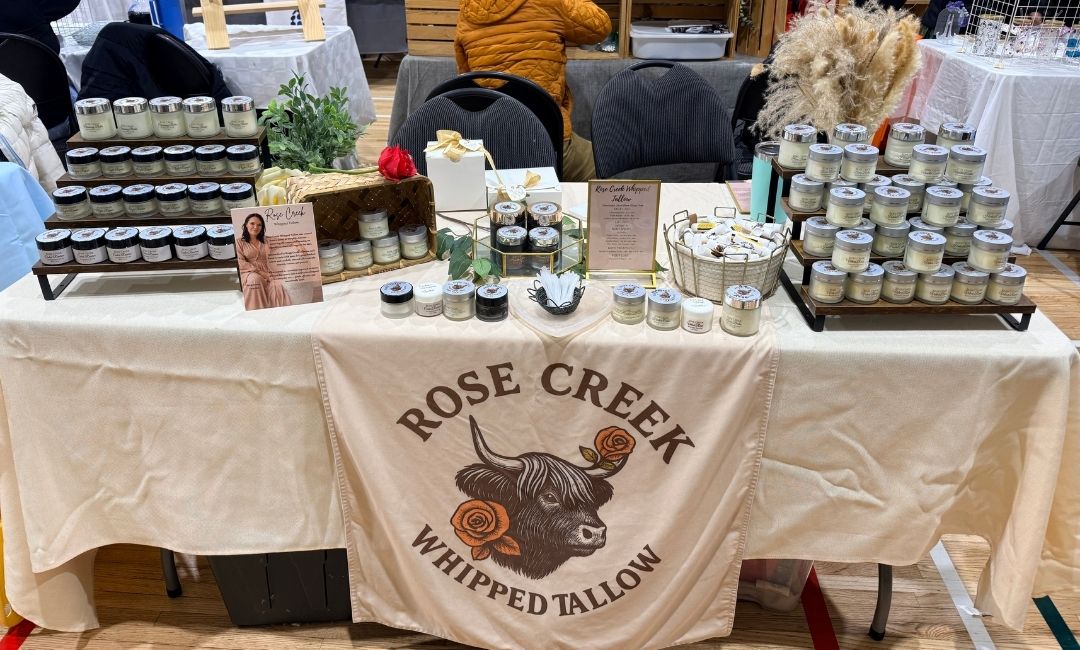
Rose Creek Whipped Tallow uses two printed cards, a pricing card and a biography card, to explain a product most shoppers have never encountered before. The pricing card handles the basics fast, while the biography card connects customers to the story of a local maker using locally sourced ingredients. Together, they've helped build a loyal following at Alberta artisan markets and inside Alberta Boot Company, where the line is now stocked year-round.
| Time to Read | ~ 5 minutes |
| What You'll Learn |
|
| Next Steps |
|
Most people walking past a market table have never heard of tallow skincare. They don't know what it is, why it works, or why it costs what it costs. Alice, the maker behind Rose Creek Whipped Tallow, doesn't have time to explain all of that to every single person who stops to look. So her cards do it for her.
A pricing card and a biography card sit on her table at Alberta artisan markets and inside Alberta Boot Company, where her products are now stocked. Between the two, a stranger can learn what the product is, what it costs, and why a fellow Albertan started making it in the first place, all before Alice finishes ringing up the last sale. Little Rock Printing® helps to make this possible with counter cards.
The Card Set and Where It Lives
Alice's setup is simple by design. A pricing card lists her products and their costs, so customers don't have to ask or wait in line for an answer. A biography card sits alongside it, telling the short version of how Rose Creek Whipped Tallow got started and what makes the ingredients different from what's on a drugstore shelf.
Both cards travel with her to every market and stay out year-round at Alberta Boot Company, where her products share shelf space with the store's own goods. If a customer picks up a jar of tallow balm and wants to know more, the cards are already doing the work before Alice has to say a thing.
Why the Biography Card Matters
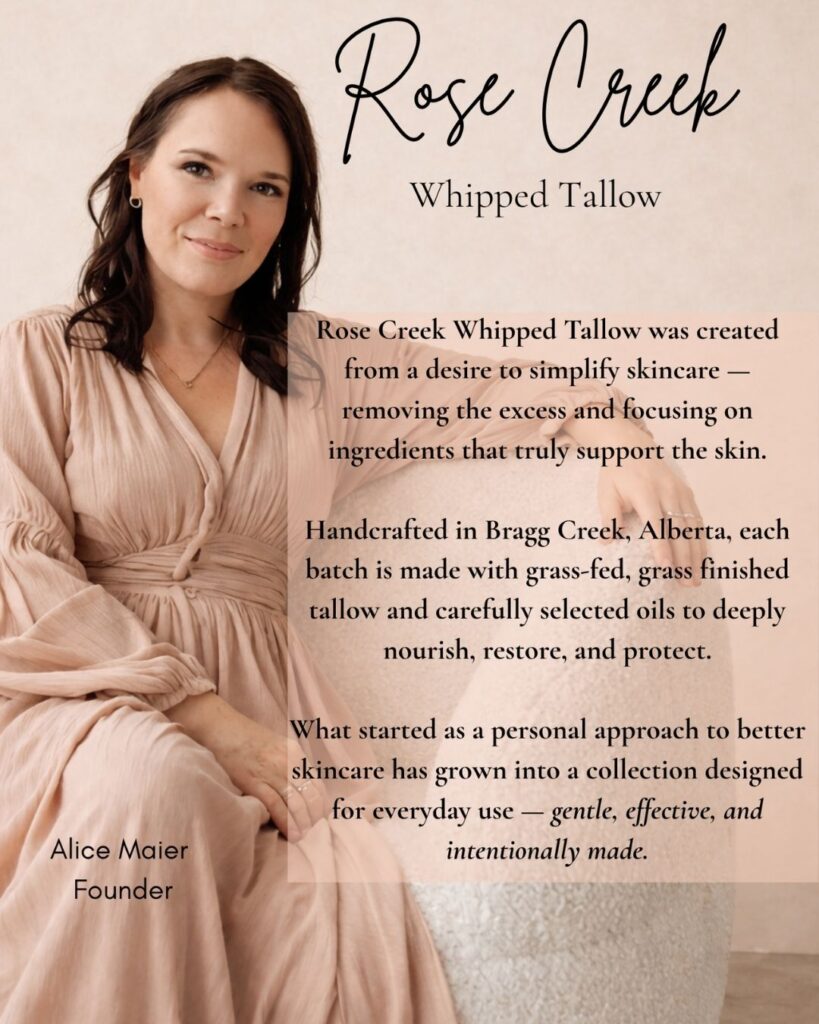
The pricing card answers the practical questions. The biography card gives people a little more context: who made this, and why did they start making it?
For a product like whipped tallow, that can make a big difference. People who have never tried it are often skeptical, so knowing that it's made locally, in small batches, by someone who grew up in the region gives them a reason to feel more comfortable with it. Alice has noticed that customers who take the time to read the biography card are more likely to come back to her booth at the next market. Some have even started asking for her by name at Alberta Boot Company.
How to Design Cards That Do the Talking
Each card should have a clear purpose. If you try to fit the pricing, the maker's story, and all the ingredient details onto one card, it can quickly become too much for someone to take in.
Give Each Card One Job
- Pricing card: prices, sizes, and product names. Keep it simple.
- Biography card: a few sentences about the maker and how the business got started.
- Put the most useful information first. On a pricing card, that's the price. On a biography card, it's who made the product and where they're from.
- Keep the brand consistent across the set. Use the same colours, fonts, and logo placement so the cards read as a matched pair, even from across a booth.
Make Sure People Can Read It
Market shoppers are usually reading cards while standing, often from a foot or two away. They may be in bright sun or trying to read while people are moving around them. So the card needs to be easy to read at a glance.
- Use a font size large enough to read without picking up the card.
- Stick to high-contrast colour combinations rather than light text on a busy background.
- Leave enough white space that the eye knows where to land first.
A card that looks good on a laptop can look very different when it's sitting on a folding table in direct sunlight. Print a proof and take a look at it in the setting where it'll actually be used before ordering the full run. Little Rock's guide to designing counter and tent cards in Canva covers the layout basics for exactly this kind of setup.
Choosing Stock and Finish for Cards That Get Handled
Market cards get picked up, flipped over, and put back down dozens of times during the day. A sturdier stock makes more sense for these kinds of cards, especially when compared with a standard flyer or business card. It's also worth choosing a finish that can handle fingerprints and a little moisture. A laminate or soft-touch finish adds some extra durability without adding much to the cost, and it can help the cards keep their appearance through a busy weekend of markets.
Once the design is done, export it as a print-ready PDF before sending it to Little Rock® for printing. Most design software has an option for this, usually called something like "Print PDF" or "Press Quality PDF." This keeps the colours and text sharp when the card is printed.
The Quality and Turnaround Angle
Alice designed her own cards in Canva, but printing them at a level that matched the quality of her product was another matter. In her words, the finished set gave her a look she couldn't have achieved on her own, including crisp colour, a polished finish, and a fast turnaround that meant she wasn't scrambling before market weekends.
That combination matters most for small makers who don't have a design team behind them. A free Canva template gets the layout started, but the print quality is what makes a homemade product look like it belongs on a retail shelf. It's a pattern Little Rock sees often among market and Etsy sellers building a booth from scratch, similar to what one Calgary author found when putting together her own Expo booth using a matching set of printed pieces.
Let Your Cards Do the Explaining
A well-designed pricing and biography card set can carry a conversation before a customer even asks a question. For Rose Creek Whipped Tallow, that pair has helped turn curious market-goers into repeat customers at Alberta Boot Company and beyond.
Ready to build a card set that works as hard as you do? Print your set with Little Rock Printing® and get a design that holds up to a full day on the table.