Summary
Making prints of your art comes down to four steps: capture the original at 300 DPI at the size you'll print, set up a print-ready PDF with bleed in CMYK, choose a paper that suits the work, and test one copy before ordering more. Canadian artists printing with Little Rock sell those prints at golf trade shows, farmers markets, art school sales, studio tours, and on Etsy, and many add cards, calendars, or booth signage made from the same artwork.
| Time to Read | ~7 minutes |
| What You'll Learn | - How five Canadian artists print and sell their work - The four steps from original to finished print - Which cardstock suits which kind of artwork - What to order alongside prints for a market table |
| Next Steps | - Photograph or scan one finished piece - Set up a print-ready PDF with bleed - Order one free test print with the code FREEPROOF |
You've got originals people keep asking about, and you'd like to sell copies. The tricky part is getting from a painting on your wall (or a file on your tablet) to a stack of prints that actually look like the original. Here's the short version of how to make prints of your art: photograph or scan the original at 300 DPI at the size you want to print, set the file up with bleed, pick a paper, and test a single print before you order a batch.
That's the same process the Canadian artists below follow when they order art prints in Canada from Little Rock. You'll see what each of them prints, where they sell, and the one thing they'd tell another artist starting out.
How Canadian Artists Turn Their Work Into Prints
Each of these artists sells somewhere different, from golf courses to Etsy. Their print orders look different too, but they all start with a print-ready file.
Backspin Prints: Golf Course Art for a Trade Show Booth (Alberta and BC)
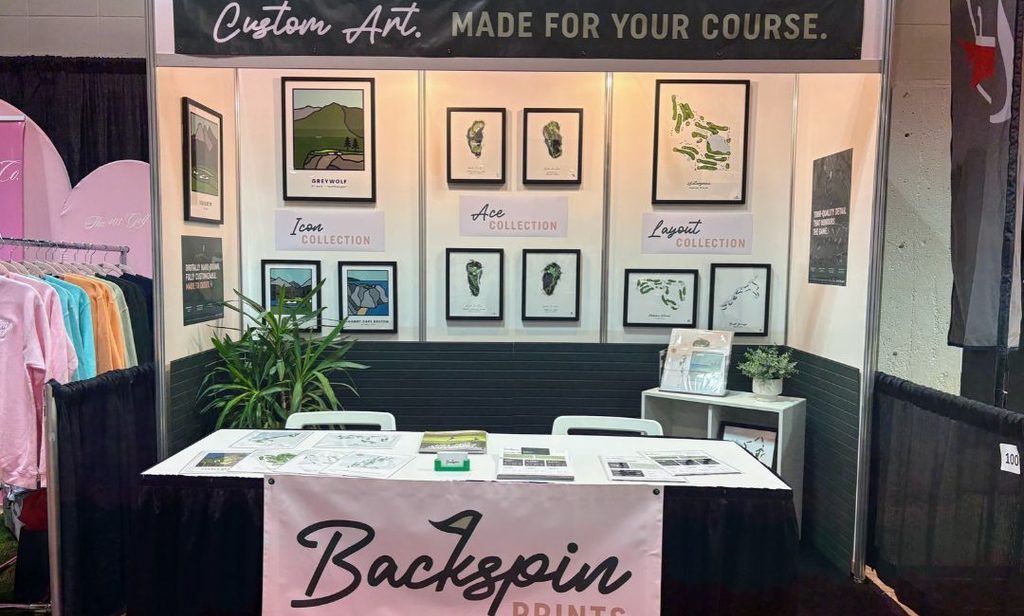
Kent Wigington sells his Backspin Prints golf artwork directly to courses across Alberta and BC. When he signed up for his first PGA of Alberta Buying Show, he needed more than the art itself. Little Rock printed his art prints along with marketing posters, banners, and branded booth signage, so the whole display matched the work on the walls.
Kent's takeaway from the show: "I received lots of positive comments on my artwork."
Lesson: Print the booth along with the art. Buyers at a trade show see your signage before they see a single print, and a banner in the same style as your work makes a first-time booth look established.
Read the Backspin Prints story
Artloric: From an Art School Show and Sale to Markets and Etsy
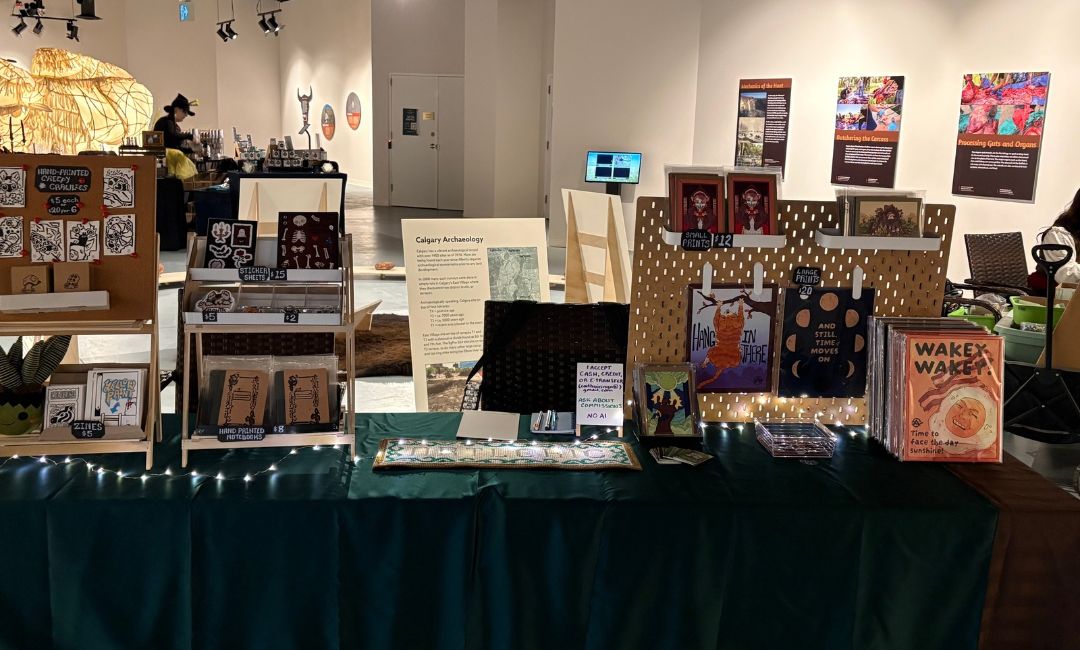
K Huizinga, the illustrator behind Artloric, started printing with Little Rock as a student showing work at the AUArts Show and Sale. Artloric has since grown into a mix of art market booths and an Etsy shop that runs between freelance illustration jobs. The market table now carries custom art prints, stickers, notebooks, and display signage.
At the Confluence Halloween market, K said, "Work printed at Little Rock Printing made up more than half my booth."
Lesson: Print close to home. K points out that with a local printer, "it's very nice to not need to pay or wait for shipping," which counts for a lot when a market date is coming up fast. For the online side, Turn Your Artwork Into an Online Store Like Etsy covers how to set up a shop.
Call Me Jono: Digital Drawings Turned Into Prints
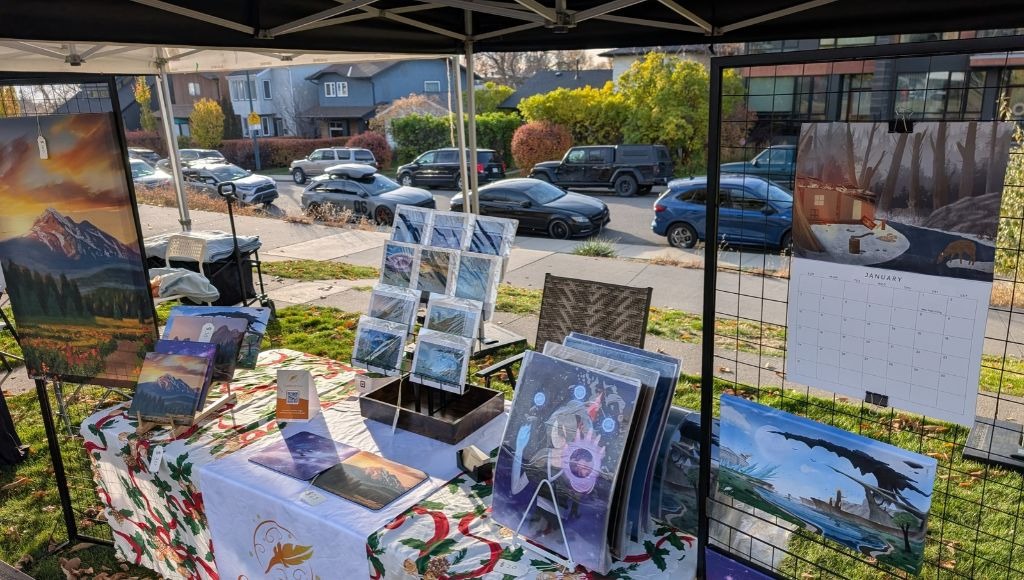
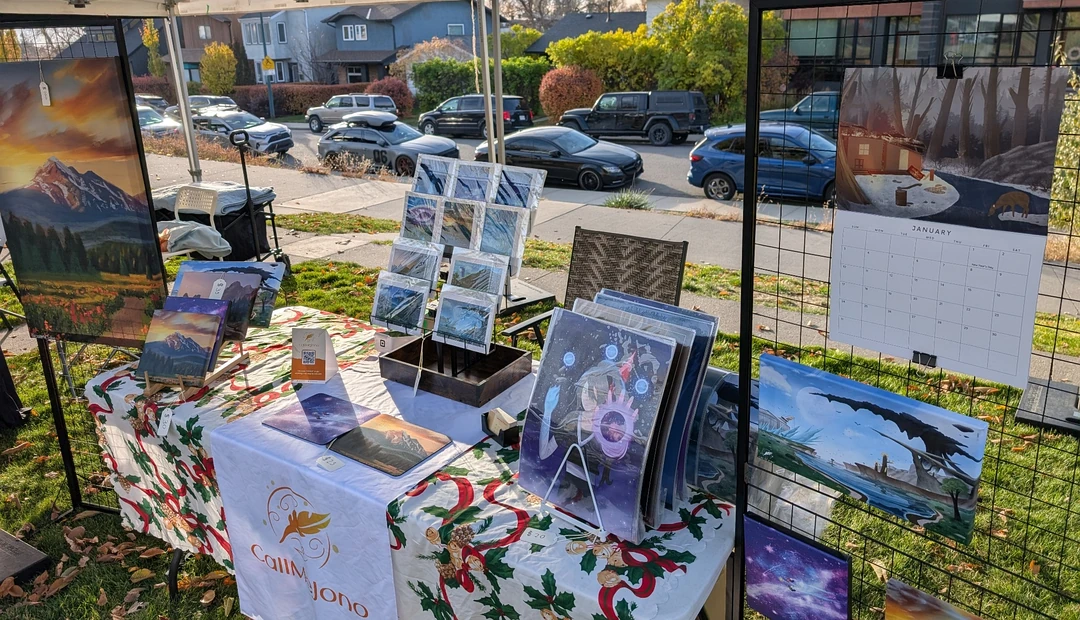
Jonathan Kahsai draws digitally and sells under the name Call Me Jono, a nickname he's had for years. He's spent this year selling at a farmers market run by Cspace, and he credits Little Rock's prices and quick delivery with helping him grow. The response at the market speaks for itself: "...everybody who stops by loves the art and the prints."
Lesson: Digital artists get to skip the scanning step, but the file still has to be built for print. For anyone working out how to make digital art prints, set your canvas to the final print size at 300 DPI from the start. Scaling up a small screen file later costs you sharpness.
arête: Watercolours as Greeting Cards (Banff)
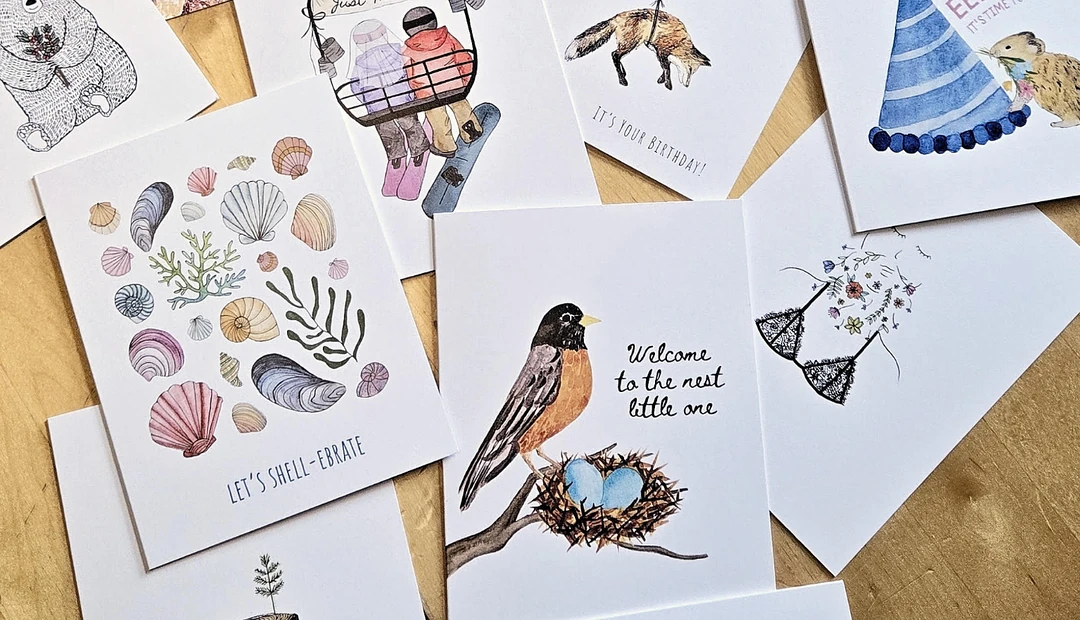
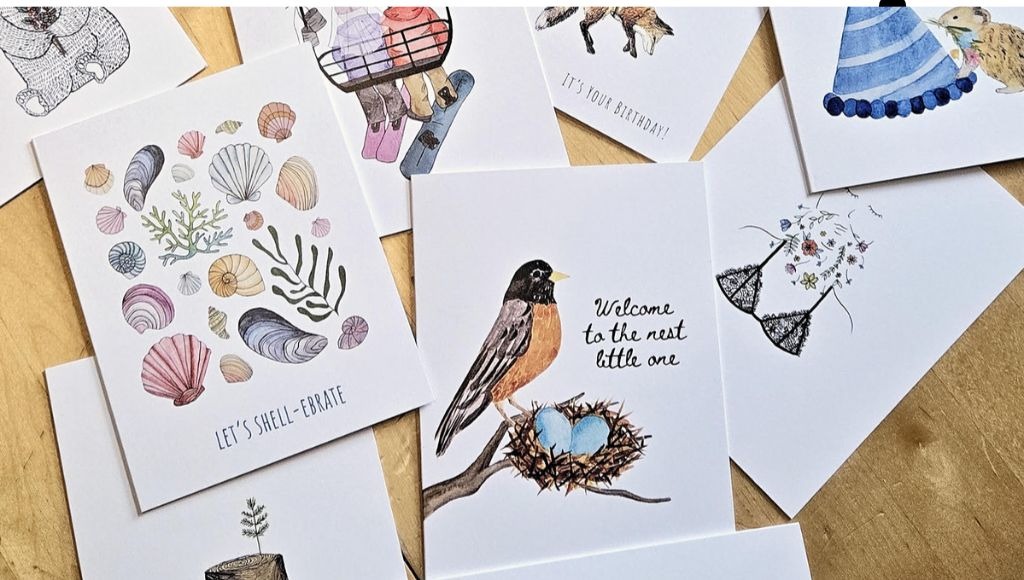
Nadia Bohonos runs arête, a small creative business in Banff that sells film photography, embroidered topography earrings, and greeting cards made from her watercolour illustrations. She's printed nearly 1,000 cards with Little Rock and sells them at farmers' and Christmas markets while working toward placement in Bow Valley shops.
Soft washes and subtle colour shifts are hard to reproduce, so colour was the real test. Nadia's verdict: "All my watercolor paintings look almost exactly like the original."
Lesson: One painting can become more than one product. A card gives buyers a lower-priced way into your work, and it's a natural fit for local gift shops.
Catherine Orfald: Paintings as Calendars (Perth, Ontario)
Catherine Orfald paints nature-inspired work and sells it in Perth, Ontario, through the Riverguild Fine Crafts co-op and events like the Perth Autumn Studio Tour. "For years I've been making calendars of my artwork to sell," she says. After moving her calendars to Little Rock, she was able to lower her prices and still keep healthy margins.
Lesson: A calendar keeps your paintings on someone's wall all year. Catherine treats hers mainly as promotion, and the lower price point reaches buyers who aren't ready for an original. Since Little Rock ships Canada-wide, artists in Ontario order the same way Calgary artists do.
Read the Catherine Orfald story
How to Make Prints of Your Art, Step by Step
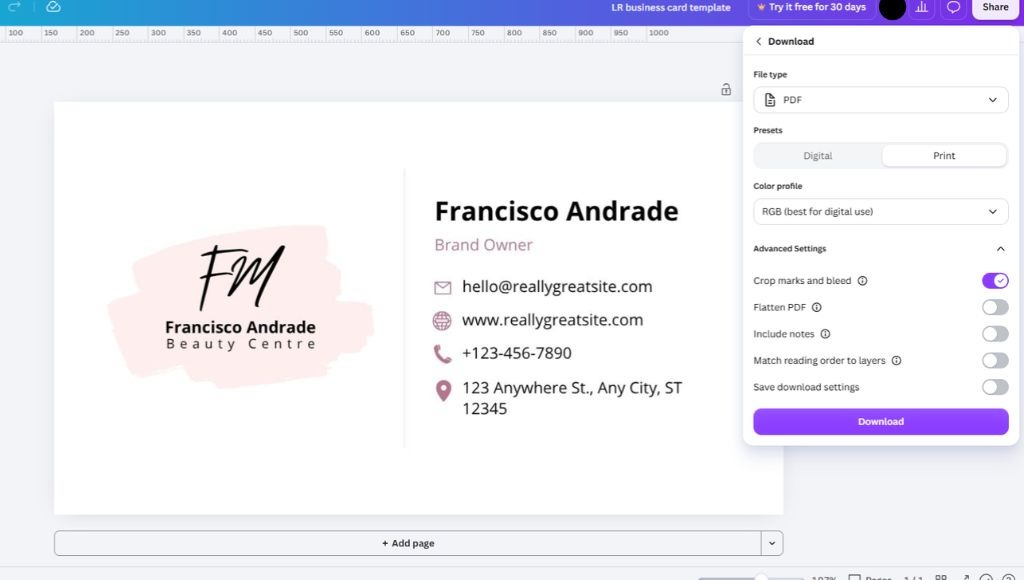
Here's how to make art prints the way these artists do. For a longer version with more detail at each stage, read Printing Art Prints: A Step-By-Step Guide.
- Digitize the original. Scan flat work, or photograph larger and textured pieces in even, indirect light. Aim for 300 DPI at the size you'll print, so an 8" x 10" print needs a file of at least 2400 x 3000 pixels. How to Photograph Artwork for Printing covers lighting and camera setup.
- Set up the file. Size the canvas to the final print dimensions, add ⅛" bleed on every side, use CMYK colour and export as a PDF. In Canva, that means choosing PDF Print and turning on crop marks and bleed. Here's how to prepare a print-ready PDF in Canva.
- Choose your paper. Glossy cover stock suits dark, high-contrast work. Uncoated stock gives a soft matte finish, and linen adds a subtle texture that cuts glare. The table below compares all eight options.
- Test one copy. Order a single print and enter FREEPROOF at checkout to get it at no charge. Check colour, sharpness, and edges in daylight before ordering a batch.
Choosing Paper for Your Art Prints
Little Rock prints art prints on eight cardstocks, and each one changes how your work reads on paper.
| Paper | Finish | Best for |
|---|---|---|
| 8PT Cover | Lightweight glossy | Affordable prints, handouts, and small posters |
| 11PT Cover | Glossy | The most popular pick, with vivid colour and strong contrast; the only option for oversized prints |
| 15PT Cover | Heavier than 11PT | Premium displays that need extra durability |
| 13PT Uncoated | Smooth matte | A natural, muted look |
| 16PT Uncoated | Thick matte | Minimalist designs and fine line work |
| 22PT Uncoated | Extra-heavy matte | Gallery-style and premium pieces |
| 12PT Linen | Textured matte | Reducing glare with a subtle linen texture |
| 16PT Linen | Thick textured matte | A sturdy, gallery-quality finish |
Soft touch laminate is available as an add-on. Paper is easier to judge in your hands than on a screen, so it's worth requesting a free paper sample kit before your first order.
What to Order Alongside Your Art Prints
Prints are rarely the only thing on a market table. These products pair well with them, and several show up in the stories above:
- Banner stands: give your booth a backdrop, the way banners anchored Backspin Prints' trade show display.
- Greeting cards: turn the same artwork into a second product, which is how arête sells its watercolours.
- Wall calendars: a lower-priced item that doubles as promotion, as Catherine Orfald found.
- Business cards: give buyers a way to find you after the market. Tuck one in every bag.
- Tent cards: put pricing and short product notes on the table so shoppers don't have to ask.
Start With One Test Print
Your first print run can start with a single copy. Order one of your custom art prints with the code FREEPROOF and see how your work looks on paper before you commit to a batch. To compare stocks first, request a free paper sample kit.
If you're already selling prints made with Little Rock, share your project at hello@littlerockprinting.com, and your work could be the next story we feature.
Frequently Asked Questions About Making Art Prints
How do you make art prints of your own work?
Capture the original at 300 DPI at the print size, set up a PDF with ⅛" bleed in CMYK, choose a cardstock, and order one test print. Once the test looks right, order the quantity you need.
How do I preserve art prints?
Keep prints out of bright light, which speeds up fading, and frame them so hands don't touch the printed surface. Store them slightly below room temperature, since heat also speeds fading. With that kind of care, prints can last for decades with minimal fading.
What is an art print?
An art print is a reproduction of an original, printed on cardstock chosen to hold colour and detail. Posters work well for enlarged photographs, while art prints are better at capturing texture and rich colour in complex images. The art prints page has a side-by-side comparison.
What size should my art prints be?
Start with the size buyers are likely to frame or display, then check that your file holds 300 DPI at that size. Standard art prints go up to 12" x 18" (minimum 2" each way), and oversized prints go up to 25.5" x 12.5" on 11PT stock. For anything larger, look at posters.
Can I order just one print to test?
Yes! You can order a single print, and using the code FREEPROOF at checkout makes that one copy free. It's the easiest way to check colour and paper before a full run.
Do you ship art prints across Canada?
Yes! Little Rock delivers Canada-wide, and Calgary-area artists can pick up art prints at the shop on 2222 Portland Street SE.