
Summary:
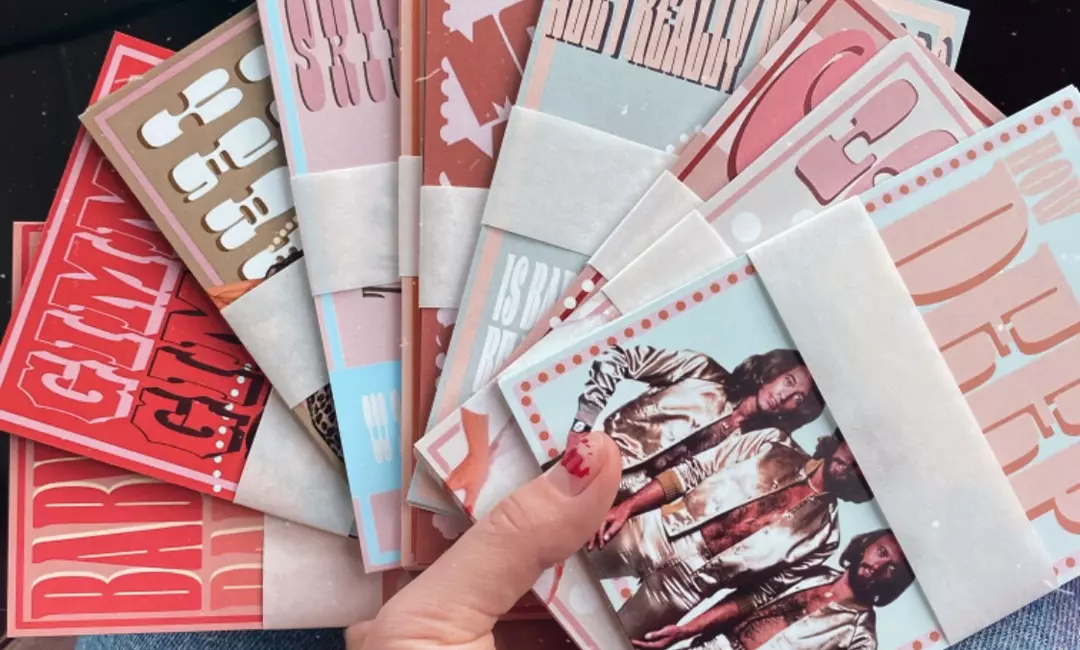
This year, graphic design is moving away from polished perfection and leaning hard into texture, emotion, and visible humanity. As AI-generated visuals flood the market, designers are responding with bolder layouts, layered compositions, playful imperfection, and tactile detail that feels unmistakably human in print. From naïve doodle aesthetics and punk-grunge revival to fluid glass effects and maximalist typography, these trends translate especially well to physical materials, where texture, scale, and finish add impact that screens can’t replicate.
| Time to Read |
|
| What You’ll Learn |
|
| Next Steps |
|
When you’re ready to design your print materials, the best place to look for inspiration is what’s trending in the graphic design world. For 2026, we’re stepping away from over-curated, over-polished visuals and into gritty textures, lots of layering, and a whole lot of rebellion.
One thing we notice with design is that not only do trends come and go, but they tend to resurface roughly every thirty years (anyone who was in high school in the mid-to-late 90s remembers the resurgence of bell bottoms), and things are no different in 2026.
So if you’re looking to update your print materials this year, Little Rock Printing has the latest design trends to help you through it.
Keeping Up With Design Trends
The best part of this list is that you can apply any of the following trends to your print materials. Whether you’re looking to make brochures, lawn signs, roll labels, or anything else, staying on trend in your print materials helps your brand stay relevant out in the world.
Here’s why keeping up with modern trends is good business for your business:
- Helps you stay relevant: Aligning with current design trends keeps your brand fresh and relevant in your customers' eyes, showing that you’re up to date with evolving tastes and preferences.
- Enhances brand perception: First impressions count, and some print materials offer only a short time to grab a customer’s attention. Trendy, modern design elements can enhance your brand's perception, conveying creativity and innovation to your audience.
- Boosts engagement: On-trend graphics are more likely to capture your customers' attention and help you stand out. Pair that with an actionable print ad, like including your URL or a QR code, and you’re likely to interact with your customer even more.
- Showcases your personality: Creative, trending graphics help differentiate your brand from competitors and provide an opportunity to showcase your personality and values. This fosters an emotional connection with your customers and humanizes your brand.
Ready to start your next design project? Keep reading to find out what’s on trend for 2026.
12 Graphic Design Trends to Try in 2026
1. Naive Design

Via: Aksenova Darya on Pinterest and Pinot & Picasso on Pinterest
Also called Doodle Core, Naive Design embraces imperfection. It’s childlike and innocent in its design, with awkward proportions, individuality, hand-drawn elements, and youthful playfulness. Think the doodles in the margins of your notebooks from middle school.
It’s the exact opposite of the super-polished brand visuals and AI-centric designs we’ve become used to. It doesn’t take itself too seriously, and in doing so, allows your brand to feel alive, warm, and real.
Where It Works Best in Print
- Stickers and sticker sheets
- Event posters and flyers
- Zines, small booklets, and inserts
- Product packaging for lifestyle, food, or creative brands
- Social-first print, like handouts or promo cards
Why It Works
The imperfect, hand-drawn look translates especially well to tactile print, where visible “mistakes” feel intentional and human rather than unfinished.
2. Kid Core

Via: Kittl
Playing off of Naive Design, Kid Core also embraces childlike visuals, but where Naive is more doodle or scribble, Kid Core leans towards nostalgia. The elder Gen Zs are close to hitting their 30s, so they’re looking to reconnect with childhood aesthetics through stickers, bold, bright colors, and crayon effects.
It’s emotional, playful, and intentionally imperfect, which is something you’ll find a lot of in this list. Imperfection is huge in 2026.
Where It Works Best in Print
- Stickers and promotional giveaways
- Posters for events, pop-ups, product launches
- Labels for playful or nostalgic brands or products
- Menus or table cards for cafes and casual spaces
- Short-run packaging and inserts
Why It Works
Bold colors and childlike visuals stand out immediately in physical spaces and don’t rely on digital polish to make an impact.
3. Punk-Grunge Revival

Via ellie.designr on Pinterest and Alex Stel on Pinterest
The 80s had their comeback. Now, we’re moving up to the next decade in the timeline. That’s right. The 90s are back, baby! 2026 is all about grit, rebellion, noise, and punk rock. Graphic design is pushing back against the oversaturation of polished visuals with visual tension that portrays individuality in a world that can often feel very lacking in it.
The Punk-Grunge trend is messy, loud, busy, and layered. It’s visual anarchy with lots of texture, ripped corners, and that torn-up music-flyer-stapled-to-a-telephone-pole feel.
Where It Works Best in Print
- Posters and wheatpaste-style prints
- Album art, zines, brochures, and booklets
- Event flyers, tickets, and venue signage
- Stickers and street-style promo materials
- Apparel tags, labels, and packaging inserts
Why It Works
Texture, noise, and layered imperfections are far more powerful in print than on screen, where grit and tactility can actually be felt.
4. Distorted Portraits

Via BYMEUS on Pinterest and Frella on Pinterest
In the early 2020s, everyone and their mother was chasing photorealism, but as AI-generated perfection became the new baseline, that level of flawlessness has started to feel sterile and uninspired. This year, graphic design is pushing back by using distortion as a visual language for drama, complexity, and emotion.
Warped faces, stretched features, glitch effects, and glass-like overlays somehow feel more human than photorealistic prints. Distorted portraits capture the fragmentation of the digital age and turn chaos into a critique. Embrace the glitch, show your brand’s humanity, and make a statement.
Where It Works Best in Print
- Posters and large format prints
- Banners, poster boards, and Big Heads
- Postcards and promotional materials
- Booklets or brochures for creative services
- Calendar and greeting cards
Why It Works
The contrast between the "digital error" look and the tangible, high-quality paper creates a striking visual tension. It’s an instant way to make your print materials feel like a piece of modern art.
5. AI-Assisted/Hybrid Design
Across the world, investors are pouring billions into AI in order to have it integrated into nearly every form of software available. In fact, it’s projected that AI-related spending will reach $2 trillion in 2026. And that includes graphic design tools, of course, like Adobe Firefly (which is integrating with Google’s Nano Banana). So in 2026, the goal isn’t to avoid AI, but to find the right balance.
Hybrid design is about using AI to handle the heavy lifting while keeping your human originality in the driver’s seat. It’s a partnership where the tech provides the efficiency, but you provide the soul and the final creative check.
Where It Works Best in Print
- Brochures and product catalogs
- Direct mail and postcards
- Multi-format campaigns (cards, flyers, signage)
- Packaging systems with multiple SKUs
Why It Works
By combining AI-assisted design with physical finishes, such as a specific paper weight or a matte laminate, you add a layer of human intentionality that makes the final product feel grounded and premium.
6. Type Collage

Via Kenslie on Pinterest and UndergroundConsideration on Pinterest
Type collage isn’t subtle. And that’s the whole point. It’s a bold, rule-breaking trend that blends multiple fonts and styles to give your print materials an energy that feels alive before your customers have even picked up your product. Type Collage reflects how designers are vibing into 2026: fast, experimental, and unapologetically expressive.
Influenced by DIY zines, gig posters, and early web aesthetics, it embraces maximalism and nostalgia to help brands win attention in a noisy world.
Where It Works Best in Print
- Event posters and flyers
- Booklet covers, brochures, and A-frame signs
- Artistic product packaging
- Business cards, postcards, labels, and stickers
Why It Works
In print, Type Collage just feels tactile. The mix of eclectic styles creates a human element that brings intention to chaos and gives your brand a physical presence before a single word is read.
7. Maximalism/Layered Compositions/Analog Chaos

Via aayush.visuals on Pinterest and Zeka Design on Pinterest
With the constant bombardment of what many in the graphic design industry are calling “AI slop” these days, designers are trying harder than ever to stand out from obvious AI-generated images. The problem is, as more money is poured into the technology, it’s getting harder and harder to do so.
That’s where maximalism comes in. Maximalism, layered compositions, and what many have dubbed “analog chaos” are more difficult for AI to replicate. This trend consists of richly layered elements, overlaps, collages, and lots of texture. Movement, pixels, penmarks, grit and grain, etc. It’s expressive, bold, attention-grabbing, and utterly human.
Where It Works Best in Print
- Posters and large-format prints
- Booklets, zines, and brochures
- Album art, art prints, and culture-forward branding materials
- Stickers, sticker sheets, and packaging inserts
- Event flyers, tickets, and promotional prints for music, fashion, creative spaces
Why It Works
Maximalism works because it allows you to lean into detail, imbalance, and visual tension, which are all areas where AI still struggles. Fine textures, overlapping elements, and subtle background noise hold their integrity on paper in a way screens often flatten.
8. Fluid/Liquid Glass Aesthetic

Via Studio 2am on Pinterest and CreativeVeila on Pinterest
Remember the glassmorphism trend that began in 2020? This year’s fluid glass aesthetic is like that, only grown up. It uses blurry, translucent panels to make designs feel modern, dreamy, and high-end. By letting the background slightly shine through, your design feels layered and deep without feeling "heavy" with shadows or massive gradients.
It’s a favorite of brands like Apple because it makes elements feel like they’re floating in a clean, futuristic space. The key is balance: keep your blur soft and your text sharp to ensure your design stays readable while looking instantly premium.
Where It Works Best in Print
- Clear stickers and transparent labels
- Business cards and hang tags
- Modern menus and tent cards
- Acrylic-style art prints or posterboards
- Event tickets and invitations
Why It Works
Fluid glass looks amazing when paired with specialty materials. Printing these “misty” designs on clear stickers or high-quality transparency film enhances the 3D floating effect, giving your brand a sophisticated, polished edge that immediately draws the eye.
9. Acidcore

Via YouWorkForThem on Pinterest
Acidcore is all about sensory overload. It’s a high-energy trend defined by neon gradients, "melting" distortions, and blown-out edges that make your design feel unstable and alive. Instead of clean outlines, you get vibrating type and shapes surrounded by acid-colored halos that bleed into the background.
In the world of Acidcore, vibe matters more than clarity. It’s not necessarily about being easy to read. It’s about creating an atmosphere and an emotional response that feels like it’s constantly in motion.
Where It Works Best in Print
- Music and event posters
- Experimental product labels
- Fashion lookbooks and hang tags
- High-vibe stickers and sticker sheets
- Edgy postcards and promo cards
Why It Works
Because Acidcore relies on intense color gradients and "vibrating" edges, it looks incredible when printed with high-quality inks. The transition between neon hues stays sharp and punchy on paper, giving your physical materials a glow and energy that’s impossible to ignore.
10. Neobrutalist Utilitarian Design

Via Behance on Pinterest/Pinterest
With so many flashy design trends this year, sometimes, less is more. That’s how Neobrutalism makes a statement by doing almost nothing at all. This trend is intentionally plain, prioritizing function over aesthetics with a "boring" look that is actually a calculated power move.
By using basic layouts, neutral colors, and zero decoration, your design feels honest, direct, and transparent. It tells your customer that you aren’t trying to manipulate them with fancy graphics, you’re just giving them the facts. It’s quiet, serious, and proves that sometimes the strongest design choice is to stop decorating.
Where It Works Best in Print
- Instruction manuals and technical guides
- Price lists and synthetic menus
- Branding for utilitarian or tool-based products
- Minimalist hang tags and packaging
- Information-heavy booklets or brochures
Why It Works
Neobrutalism relies on raw, simple layouts, so it highlights the quality of the print itself. When there are no gradients or shadows to hide behind, the crispness of the type and the texture of the paper stock take center stage, making your brand feel grounded and trustworthy.
11. Future Medieval/Neo Folk

Via Victor Candêo on Pinterest and Nstrwa on Pinterest
This trend is all about mixing old-world charm with a modern edge. Think traditional symbols, ornate details, and historical typography reinterpreted through a contemporary lens. It’s a mystical kind of nostalgia that pulls from folklore and ancient stories to create something that feels timeless rather than just vintage.
With earthy palettes, woodcut-inspired illustrations, and rich textures, this style is perfect for brands that want to feel grounded, authentic, and a little bit mysterious. A reimaigning of the past, not a repeat of it.
Where It Works Best in Print
- Art prints or posters
- Wine, spirit, or other drink labels
- Greeting cards and invitations
- Booklets and editorial inserts
- Custom hang tags for boutique brands
Why It Works
Neo Folk thrives on texture and detail. When you print these intricate, woodcut-style designs on premium paper or matte-laminated labels, the contrast between ancient visuals and modern, crisp execution makes your product feel like a high-end heirloom.
12. Technical Futurism

Via Hilmi on Pinterest and Jaihilldesign on Pinterest
Inspired by sci-fi interfaces and blueprint-style visuals, this trend feels more like a high-tech operating system than a traditional layout. It’s all about using grids, schematic lines, and data-driven diagrams to create a look that is analytical and machine-like.
While it looks functional, it’s actually purely decorative, designed to build a speculative, "cold" atmosphere that feels calculated and intentional. With monochrome palettes and sharp contrast, this trend taps into our fascination with data and the imagined systems of the future.
Where It Works Best in Print
- Techy brochures and data-driven booklets
- Large-scale posters and art prints
- Event tickets and badges
- Product labels and packaging
- Editorial layouts for tech, fashion, or music brands
Why It Works
The beauty of Technical Futurism is in the fine details. Thin lines and tiny measurements look sharp when printed, giving your materials a high-definition feel that screen displays can’t always capture. It’s a great way to make your brand feel innovative and forward-thinking.
Bringing 2026 Design Trends to Life
Design trends come and go, but the goal stays the same: to create print materials that feel intentional, relevant, and unmistakably you.
In 2026, that means leaning into texture, contrast, imperfection, and bold creative choices that cut through the noise, especially in a world flooded with AI-generated visuals. Whether you’re experimenting with bold colors, maximalist layouts, playful illustration, or futuristic finishes, print gives these trends weight, tactility, and staying power.
When you’re ready to turn your ideas into something you can actually hold, Little Rock Printing is here to help. From short runs and specialty materials to free proofs and fast turnaround times, we make it easy to bring modern design trends into the real world without losing what makes your brand human. Contact one of our experts to get started.
Frequently Asked Questions
Do I need to follow every design trend to stay relevant?
Not at all. Trends work best when they’re used selectively. Borrowing one or two elements, like layered textures or playful typography, can modernize your print materials without forcing a complete brand overhaul.
Will these trends still work if my brand isn’t “creative” or edgy?
Of course! Many of this year’s graphic design trends are adaptable. Subtle texture, intentional imperfection, or graphic layering can be applied in restrained ways that still feel professional and on-brand.
How do I know if a trend will translate well to print?
Typically, if a design trend relies heavily on texture, color, layering, or contrast, there’s a good chance that it’ll look better in print than on screen. Print adds tactility and depth that digital designs just can’t replicate.
What’s the safest way to experiment with a new trend?
Start small. Try new design element on stickers, posters, or short-run promotional pieces before applying it to core brand materials like brochures or packaging. And don’t forget, you can always order a free proof right from Little Rock to ensure that you like what you’re getting. Just use the code “FREEPROOF” at checkout.


